

We use cookies to improve your experience and deliver personalized content.
By using our website, you agree to our
Cookie Policy.
If you want to find your organization's most pervasive, unmapped operational risks, do not look at your external threats. Look at your internal environment.
For the vast majority of enterprise and SMB leaders, productivity tools are viewed as a utility—as fundamental as electricity. We buy the licenses, provision the accounts, and assume the platform’s native infrastructure inherently handles the rest.
But behind this assumption lies a costly paradox. In the rush to enable seamless collaboration over the last few years, organizations did not just adopt a productivity suite; they inadvertently built a sprawling digital ecosystem. Today, that ecosystem is likely plagued by unassigned premium licenses, unchecked user privileges, and structural gaps that leave corporate data exposed.
The next 3–5 years will not be defined by what cloud tools you deploy, but how tightly you govern them.
When executives look at cloud expenditures, the focus is almost always on massive infrastructure costs like AWS or Azure. Productivity tools, hiding under SaaS operational budgets, rarely gets the same forensic financial scrutiny.
This is a mistake. Licensing misalignment happens gradually, then all at once. Organizations routinely pay for top-tier licenses for users who only require basic functionality. Departed employees leave active licenses behind, and premium add-ons are left idling, entirely forgotten. Over a multi-year timeline, this structural over-provisioning represents a massive capital drain that could otherwise fund strategic, high-ROI IT initiatives.
The financial drain, however, is only half the problem. The more pressing executive blind spot is the illusion of native security. Many leaders believe that because Microsoft is a security behemoth, their specific tenant is automatically locked down.
In reality, a default M365 deployment is built for accessibility, not zero-trust security. Without explicit, tailored engineering, massive gaps exist:
Skeptics within management often argue that auditing a perfectly functional tenant risks disrupting user workflows or creating unnecessary friction. "Our employees are collaborating smoothly," the argument goes, "so why risk changing licenses or adding authentication layers?"
This perspective confuses operational momentum with operational health. A system is not "working" simply because it has not collapsed yet. Waiting for a massive compliance penalty or a crippling data breach to prove your tenant was unoptimized is a catastrophic approach to corporate governance. True optimization does not hinder productivity; it secures and streamlines it.
To transition from passive consumption to strategic mastery of your Microsoft 365 environment, leadership must pivot toward a continuous evaluation framework.
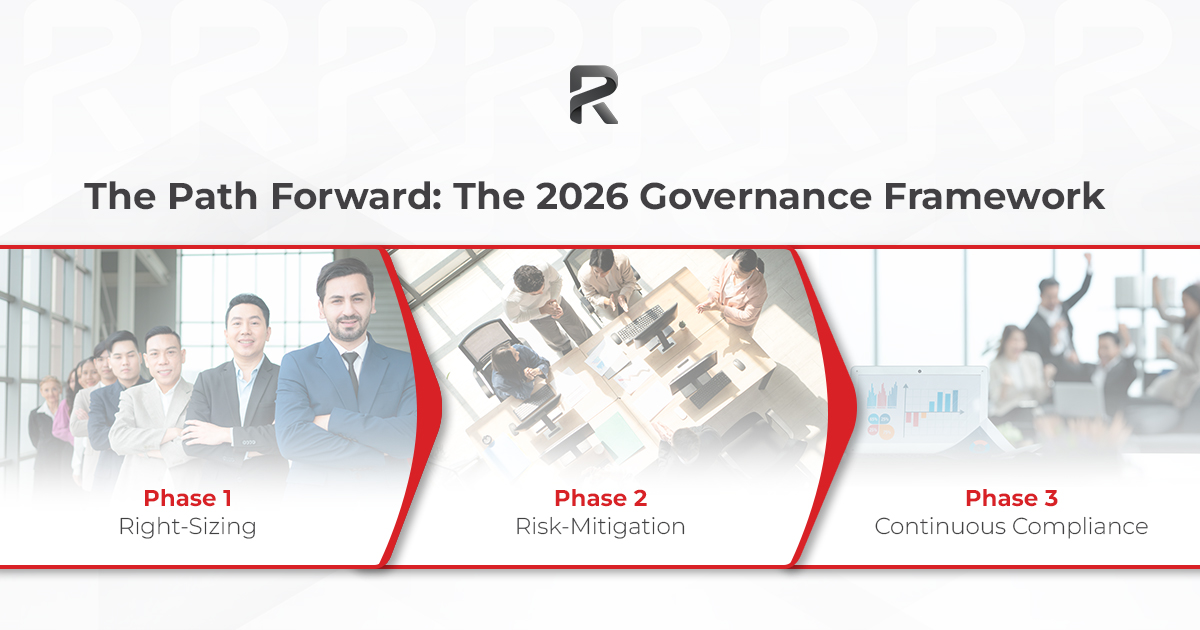
To help you establish this baseline without upfront financial friction, Radenta Technologies Inc. is offering a limited-time, no-cost Microsoft 365 Assessment.
Designed specifically for mid-market and enterprise operations, this strategic evaluation gives your leadership team a clear, data-driven roadmap to:
Do not allow your core collaboration suite to remain your biggest unmanaged variable. Contact Radenta Technologies Inc. today to schedule your complimentary Microsoft 365 assessment and turn your cloud environment into a lean, highly secure asset by answering this form. You may also Call 0919 081 2978 or email info@radenta.com for more information.
Connect with us on our Social Media Accounts:
LinkedIn: https://www.linkedin.com/company/radenta-technologies-inc.
YouTube: https://www.youtube.com/@radentatechnologies
Facebook: https://www.facebook.com/radentatechnologies/
Twitter: https://twitter.com/radentaPH
Instagram: https://www.instagram.com/radentatechnologies/
TikTok: https://www.tiktok.com/@radentatechnologies
